Red Flag Warning Ignites Urgency Across Orlando as Drought Deepens
At 3:30 p.m. on the busy intersection of Colonial Drive and Mills Avenue in the College Park neighborhood, the usual hum of traffic feels heavier under a hot, dry wind. Leaves swirl in the air, dust kicking up from dry patches along the sidewalks. The sky is clear, but the tension is thick. Residents glance nervously at the parched lawns and the warning signs posted at nearby parks—reminders of the Red Flag Warning issued by meteorologists that afternoon. The air is brittle; fire danger is at a critical level.
What Happened
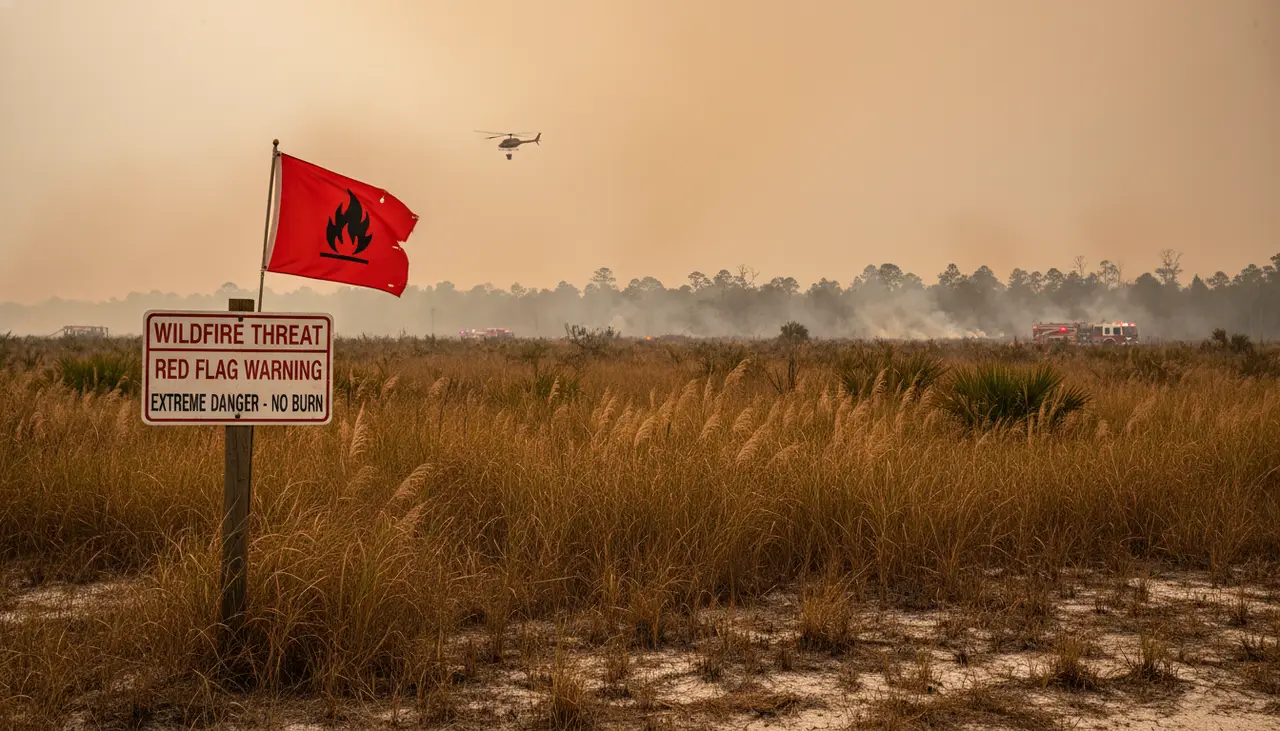
Starting from the afternoon and extending into Monday evening, Orlando and surrounding Central Florida areas are under a Red Flag Warning. The National Weather Service, with meteorologist T.J. Springer from FOX 35 Storm Team confirming, issued this alert due to sustained winds exceeding 15 mph combined with relative humidity dropping below 35%. This dangerous combination is fueled by severe drought conditions and blustery winds brought in by a recent cold front.
These conditions are not isolated. Central Florida is experiencing its worst drought since 2012. Cities like Orlando, Gainesville, Ocala, and The Villages are all significantly dry. Flagler County declared a state of local emergency earlier this month after a 170-acre wildfire on Old Dixie Highway was contained on February 4. Burn bans are in effect across multiple counties including Orange, Marion, Alachua, Volusia, and Osceola. In Volusia County, the ban began on Friday, February 20, covering unincorporated areas and cities such as Oak Hill, Lake Helen, and Pierson.
Recent fires in Osceola County burned up to 80 acres, with active incidents reported near Avenue A in Intercession City and Poinciana. Fire officials, including Volusia County Fire Chief Joe King and Osceola County Fire Chief Jon Haskett, emphasize that these bans prohibit open flames, though contained gas and charcoal grills may be used with extreme caution. Violators face fines up to $500 and up to 60 days in jail.
Why This Matters Locally
For Orlando residents, this is not just a weather report—it’s a direct threat to safety, property, and daily life. The dry conditions and strong winds make any spark a potential disaster. One careless cigarette tossed from a vehicle, one spark from a hot car parked on dry grass, or a stray ember from a grill could ignite a wildfire that spreads quickly through neighborhoods.
Wildfires in urban or suburban areas cause evacuations, destroy homes, and disrupt traffic for hours or days. If a fire breaks out near your home, you could face costly repairs, temporary displacement, and weeks of stress navigating insurance claims and rebuilding. Emergency responders are already stretched thin, meaning your property and safety could be at greater risk if fires multiply.
Burn bans also mean you cannot legally burn yard waste or use open flames, impacting your ability to maintain your property normally. Ignoring these bans risks fines and legal trouble, adding financial strain when resources are already tight. The drought also stresses landscaping and local water supplies, increasing the risk of damage to your yard and home exterior.
If This Happens to You: What to Do Immediately
- Stop any outdoor burning immediately. Put out grills and refuse using open flames.
- Remove dry leaves and debris from around your home to reduce fire fuel.
- Do not park vehicles on dry grass or vegetation where heat or exhaust could spark a fire.
- If you see smoke or fire near your property, call 911 without delay.
- Follow evacuation orders quickly and calmly if issued by local authorities.
- Keep a list of emergency contacts, including your insurance company and local fire department.
- Stay informed through local news and official channels for updates on the drought and fire conditions.
When Local Professional Help Becomes Necessary
If fire damages your home or property, you need to contact professional repair services immediately to assess structural safety and begin remediation. Delaying repairs can lead to further damage, mold, or unsafe living conditions.
Legal help becomes necessary if you face disputes with insurance companies over wildfire claims or if you receive citations for violating burn bans. A local attorney familiar with Florida wildfire and property law can protect your rights and guide you through the process.
Contractors and planners are essential if rebuilding is required. Wildfire damage often requires specialized construction to comply with local codes and fire safety standards. Professional planners can help you redesign your property to minimize future fire risk.
Local Context: What Orlando Residents Need to Know
Orlando’s neighborhoods, including College Park, Baldwin Park, and the areas surrounding Colonial Drive and Mills Avenue, are not immune to these risks. Residents commute through dry corridors daily, passing parks, wooded areas, and dry open spaces where fires could start and spread. The city’s proximity to drought-stricken counties with active burn bans highlights the regional scale of the threat.
With limited rainfall expected and drought conditions worsening, the Red Flag Warning is a clear signal that this is a critical time for vigilance. Every resident’s actions count toward preventing a disaster that could disrupt life across Orlando.
Where This Is Happening in Orlando
The Red Flag Warning affects areas across Orlando, including key corridors like Colonial Drive, Mills Avenue, and neighborhoods such as College Park. These streets are vital arteries for daily commutes, connecting residents to downtown, schools, and shopping centers.
Nearby parks and green spaces, often frequented by families and outdoor enthusiasts, are especially vulnerable. The dry conditions extend into surrounding counties where burn bans remain active, including Orange County and neighboring Volusia and Osceola counties.
Locals traveling through these areas should remain alert to fire hazards and adhere strictly to burn bans. The landscape, once lush, now poses a real threat of wildfire ignition that can spread rapidly under the current weather conditions.